
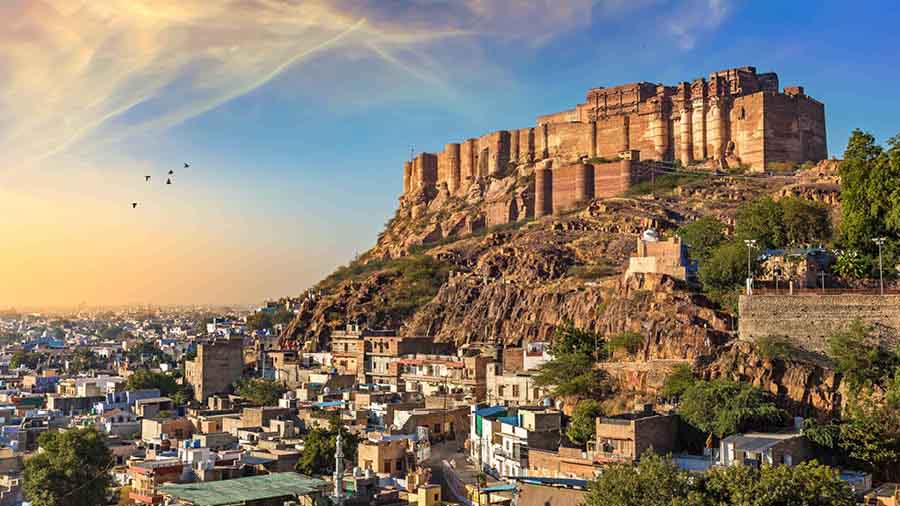
Mehrangarh Fort, built in 1459 by Rao Jodha, rises majestically above Jodhpur, offering breathtaking views of the “Blue City.” The fort is spread over 5 km with seven massive gates like Jai Pol and Fateh Pol, each marking historical victories. Inside, you’ll find ornate palaces such as Sheesh Mahal (Mirror Palace), Phool Mahal (Flower Palace), and Moti Mahal (Pearl Palace). The fort also houses a world-class museum showcasing royal arms, costumes, paintings, and palanquins. Visitors can also enjoy cultural performances and zip-lining activities around the fort walls.
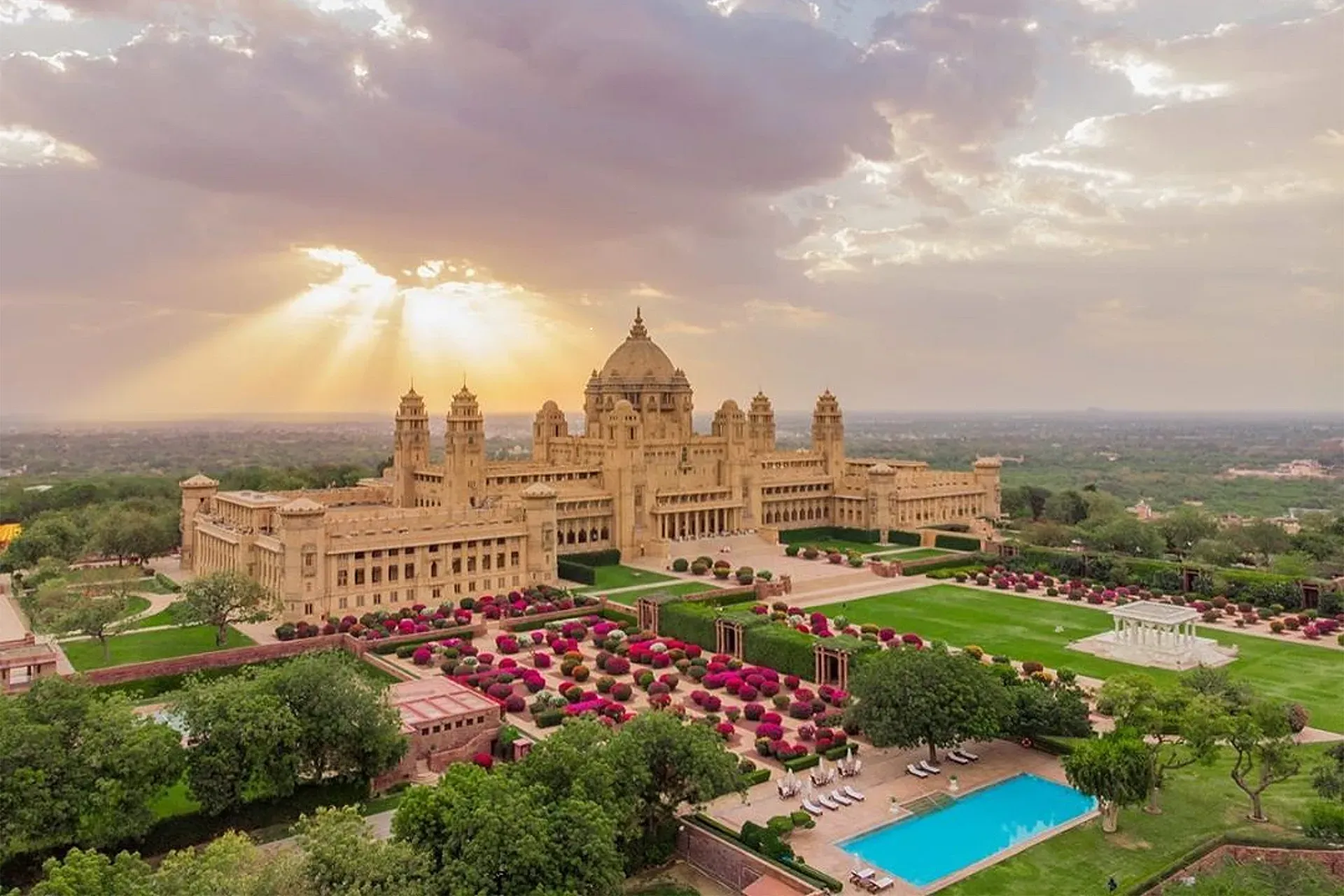
Umaid Bhawan Palace is an architectural masterpiece built between 1928 and 1943 during a famine, providing employment to thousands. Designed by British architect Henry Vaughan Lanchester, it combines Indo-Deco, Art Deco, and classical styles. With 347 rooms, it is one of the largest private residences in the world. Part of it is a luxury Taj Palace Hotel, part is still home to the royal family of Jodhpur, and another part is a museum displaying royal family photographs, clocks, hunting trophies, and vintage cars. The surrounding gardens add to its regal charm.
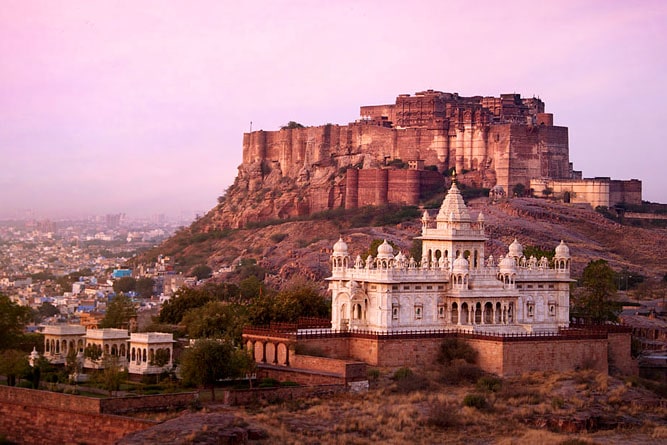
Constructed in 1899 by Maharaja Sardar Singh in memory of his father, Maharaja Jaswant Singh II, Jaswant Thada is a white marble cenotaph set beside a serene lake. The marble is so finely polished that it glows when sunlight falls on it. The cenotaph is adorned with intricately carved marble lattice screens, portraits of Rathore rulers, and traditional Rajput architecture. The gardens and lake make it a peaceful retreat after visiting Mehrangarh Fort, which is just a short distance away. It is also known for its calming spiritual atmosphere.
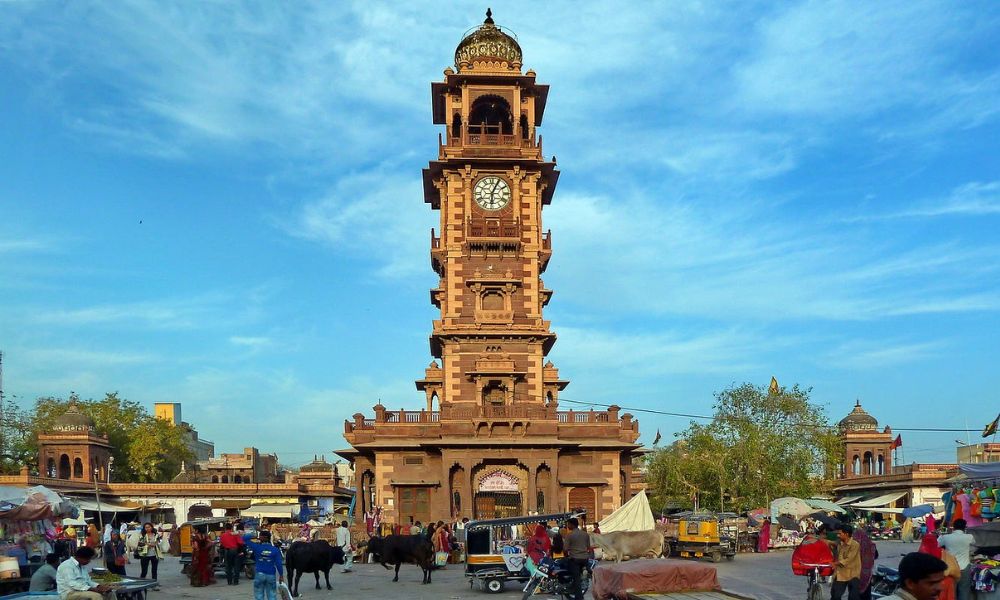
The iconic Clock Tower (Ghanta Ghar), built by Maharaja Sardar Singh, is the centerpiece of Jodhpur’s bustling old market. Sardar Market has more than 7,000 shops selling everything from Rajasthani spices, hand-embroidered fabrics, bandhej sarees, mojari shoes, handicrafts, and antique items. It is also one of the best places to try local snacks like mirchi vada and makhaniya lassi. The market remains crowded throughout the day, making it a lively spot to experience Jodhpur’s local culture and daily life.
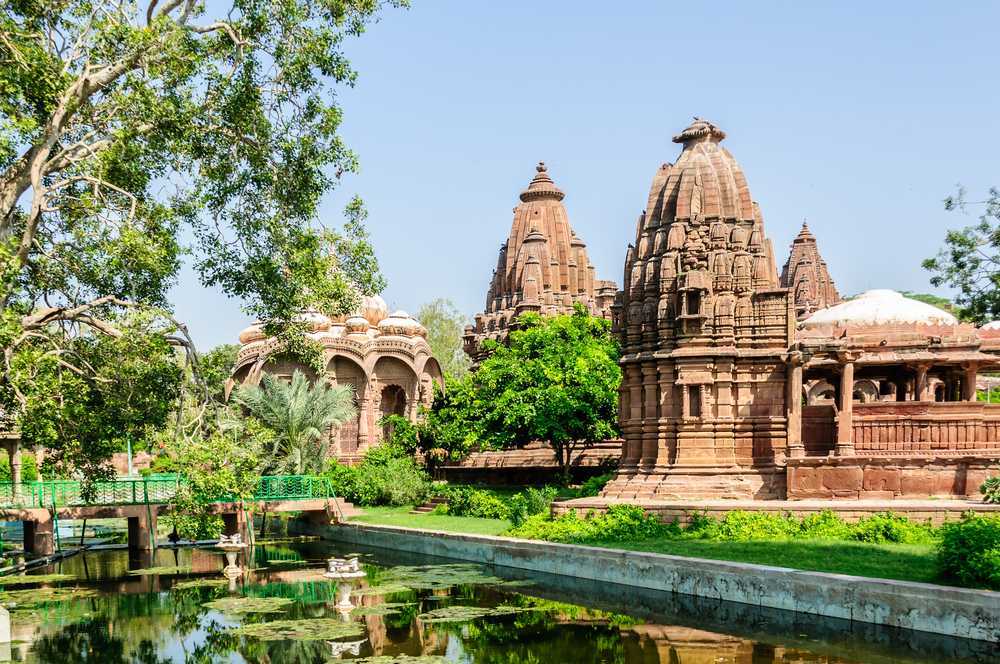
Located 9 km from Jodhpur, Mandore was once the capital of the Marwar kingdom before Jodhpur was founded. The gardens are dotted with cenotaphs (chhatris) of Marwar rulers, intricately carved temples, and statues of Hindu deities. One of the main attractions is the Hall of Heroes, dedicated to Rajput folk heroes and deities. The lush greenery, rock terraces, and historic charm make it a popular picnic spot. Visitors also enjoy exploring the old ruins and the nearby museum displaying artifacts from Mandore’s glorious past.
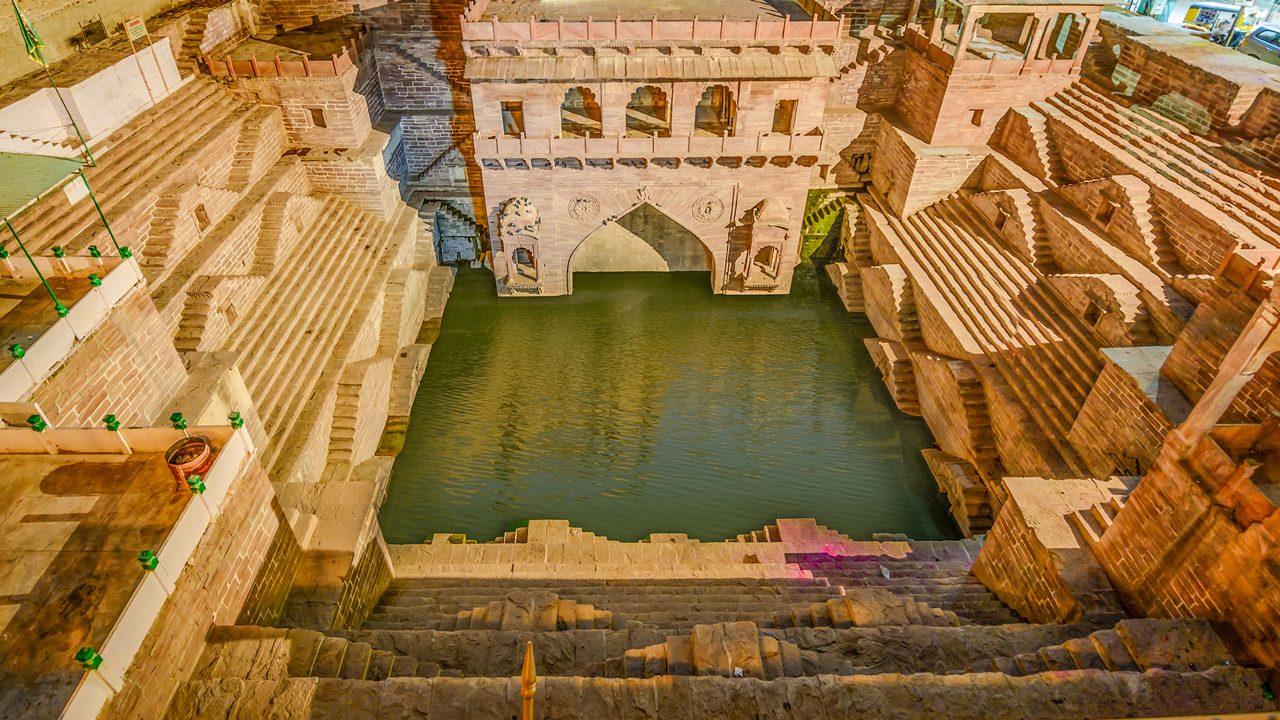
Built in the 18th century by Maharaja Abhay Singh’s queen, Toorji Ka Jhalra is a stepwell that once served as a vital water source for the city. It is 200 feet deep with intricately carved sandstone steps and niches. After restoration, it has become a popular hangout spot in Jodhpur, especially with the trendy cafés and boutiques that now surround it. In the evenings, the lighting around the stepwell creates a beautiful atmosphere, making it a favorite for photography, relaxation, and experiencing Jodhpur’s old-world charm.